
A Berlin print lab's new best problem: too many leads
Glastrix is a UV printing lab in Kreuzberg, Berlin. Since 2015, Eric prints directly onto glass, metal, wood, mirror, copper and ceramic, mostly for artists and bespoke B2B orders.
He is eager to move further into white-label fulfillment: printing larger orders for other brands and shipping them directly to their customers under their name. This will allow him to scale and grow his business. However, that industry is hard to get into, which is why he contacted me. He wanted more B2B leads and wasn’t sure where to start. His WordPress site looked good, but it had no analytics, so there was no way to tell where leads came from and what people did on his website.
Before the relaunch, people found Glastrix by searching for “Glastrix”: the few visits that came through Google were people who already knew the name. Three months later, Google search sends 13 times as many visits as in the first weeks. ChatGPT is the bigger story. It sent practically nothing at launch and now sends about 30 times as many visits, as many as all search engines combined. More importantly, these visitors convert. The number of leads quadrupled compared to 3 months ago.
- Google search
- ChatGPT
Monthly visits: ChatGPT 32× the launch level, Google search 13×
The project followed the steps I use with every client. This is what each one looked like for Glastrix.
- 1ListenOne call in June: a slow WordPress site and a goal of B2B clients.
- 2AnalyseA competitor audit and keyword research: buyers weren't searching for the keywords Eric was pushing.
- 3ProposeA plan we agreed first: a B2B site, content buyers search for, visibility beyond the site.
- 4PrototypeA preview site to click through, measured against the old one.
- 5LaunchTwo languages, old URLs redirected, the NFC platform under one domain.
- 6Measure and scaleAnalytics from day one, articles Eric approves himself, and a weekly loop that turns more leads into sales.
- 7Maintain & GrowAutomated tests, self-service publishing, and a site that answers buyers quickly.
1Listen
In June, before I opened a code editor, Eric and I talked. I asked about his business and where he wanted to take it, and mostly listened.
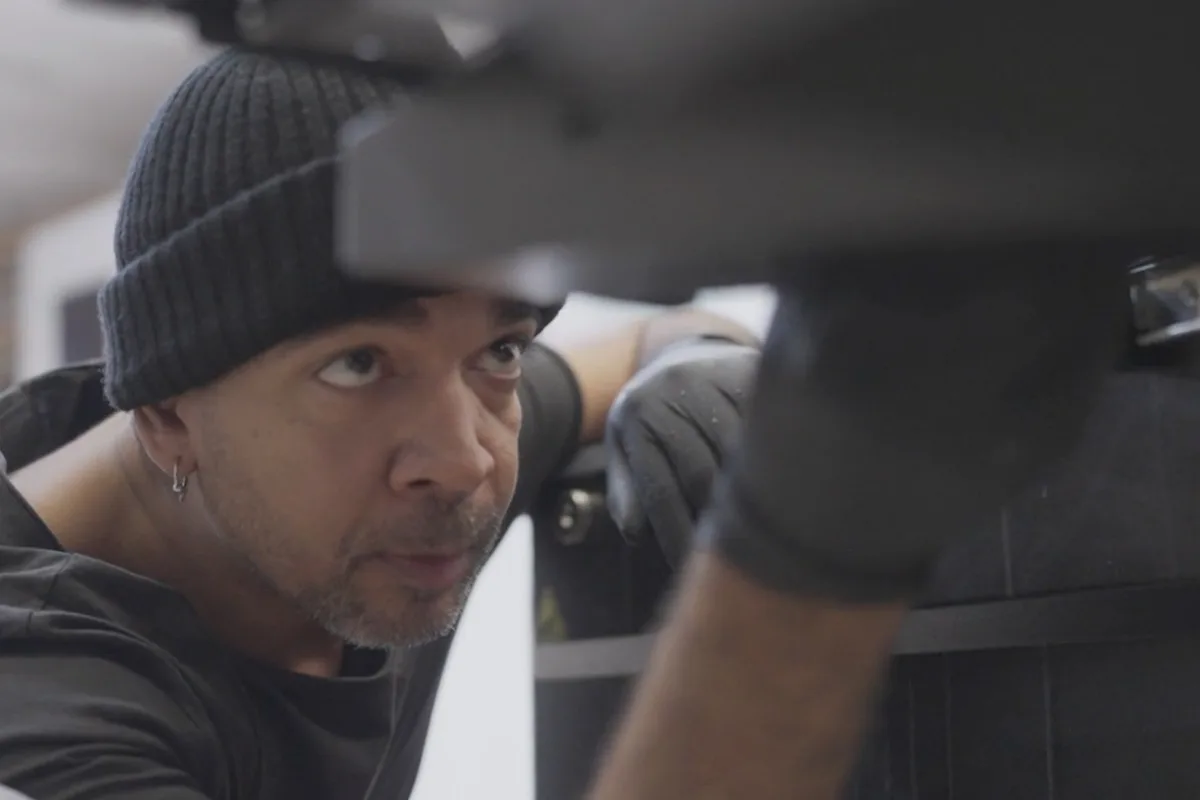
People still manage to find me, but mostly it's artists. […] A bulky WordPress website that crashes every once in a while when there's an update. […] I also have pricing calculator on the website, but it's not accurate with what I have going on.
The site also loaded slowly and was built for desktop. The people finding him were artists and private buyers. The people he wanted were print resellers, interior studios and companies that need white-label fulfillment inside the EU.
2Analyse
Eric had built the site around what he knew: the printing technology, his brand, and how it all looked on a desktop screen. Nobody had looked at it from the buyer’s side and asked what a business that needs a UV printing partner searches for, what it looks for on the page, and what it wants from a partner. That question is what I brought.
I started with the competition. Printful and Prodigi own the white-label fulfillment language, but only for canvas and apparel. Die Direktdruckerei and FLYERALARM rank for UV Direktdruck and have no fulfillment model. I found nobody in the EU ranking for what Glastrix sells: printing on hard substrates in Berlin, plus white-label fulfillment from a single piece.
Glastrix already sat on page 1 for long, specific terms like “UV Druck auf Glas B2B Kleinauflage Berlin”, so authority was not the problem. Almost nobody knew to search for what he offered. The first weeks of data confirm it: nearly every visible Google search that led to the site was for the name “Glastrix” itself, so only people who already knew him found him.
- Data from
 PostHog
 Google Analytics
 Search Console
Keyword research showed where the buyers were. B2B-specific UV print terms have no measurable search volume in Germany. Buyers search for materials and products, and “druckpartner” was the one B2B term with real search volume and little competition. So the plan was to rank for what buyers type (materials, use cases, comparisons) and make the white-label offer obvious on the page they land on.
3Propose
With the findings in hand, I drafted a plan that combined the full buyer journey with Eric's business ambitions. We went through it together, and only once he agreed did we move on to the prototype.This was more than a website rebuild; it was a rethink of the business: whom to attract, how they get in touch, and where Eric adds the most value. The key shift was moving away from selling decorative glass prints and towards building long-term relationships with businesses that need a reliable printing partner. A buyer who starts with “I need a durable, professional print” has to be guided to concrete material and technology specifications, and that conversation works best in a meeting rather than over the phone.
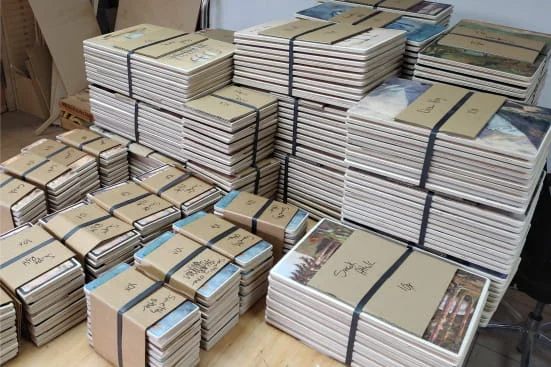
The goal: attract and convert B2B buyers and white-label customers who find Glastrix through search and AI assistants.
- A new site built for B2B buyers. Replace the WordPress site and make ten years of finished work findable, in two languages, with the NFC platform under the same domain. Leads would also arrive differently: instead of sending a contact form, buyers book an appointment, including a paid studio visit. This was the first milestone.
- Content buyers search for. An article for every material, use case and comparison, written in German and English, each approved by Eric before it goes live.
- Visibility beyond the site. Google Business Profile, directory listings and public data that search engines and AI assistants can verify.
- Measurement from day one. Analytics from the first day, so every later decision is compared with a baseline.
Eric would own the code and the domain. Don’t just give someone a fish, give them the fishing rod: he received Claude Code training and full access to edit his site himself, and he owns the GitHub repository that powers it.

4Prototype
I built the new site in Next.js on Vercel and put it on a preview address. Eric clicked through it, sent corrections, and saw them land before his live site changed. I evaluated it against the old site on KPIs like loading time, SEO and GEO potential, and how well visitors turn into leads.
| Old site | New site | |
|---|---|---|
| Languages | German, some English fragments | Full German and English |
| Gallery | Basic lightbox | Larger gallery with pinch-to-zoom |
| Analytics | None | GA4 and PostHog behind a consent banner |
| Pricing | Calculator nobody could update | Live prices by material, thickness and quantity |
| Speed | Loaded slowly | Static pages from a CDN |
| Layout | Built for desktop | Built for phones as well |
| Leads | Contact form | Book an appointment, including paid studio visits |
| Stability | Crashed now and then after updates | No plugins to update |
We paid particular attention to the phone layout. It wasn’t because we had a lot of phone traffic already, as the site was optimized for desktop. However, we knew the market used their phone. This paid off: already 40% of traffic is on phone, and rising.
The biggest structural change was the NFC business cards. We had built the full frontend ordering and backend processing flow in parallel, and now it was time to publish them into the main site. This involved processing personal information, designing in a small window, and adjusting the order to how the printer needed it. Now Eric can process all incoming orders in his personal backend system.
5Launch
We switched the domain in July. The indexed WordPress URLs redirect to their new pages, so links in Google and in customers’ bookmarks kept working.
Most of what went live was work Eric had already done. Every finished project became a story page with a narrative, specs and structured data in both languages. Each material (glass, metal, wood, copper, mirror, acrylic, ceramic, signage, backlit) got its own page with an FAQ that search engines can show as rich results.
I rebuilt the pricing calculator from scratch. Visitors pick material, thickness, quantity and size and see the price per piece, volume discounts included. They run about one calculation for every eight visits.
6Measure and scale
What the numbers show
The old site had no analytics, so the first two weeks of the new one are the baseline, doubled to match a full month. In those weeks about three in four visits were direct: people who already knew Glastrix and typed in the address. Almost all of the little traffic from Google came from people searching for the name “Glastrix”. ChatGPT sent practically nothing. The site worked as a showcase for people who already knew him.
| September vs. the first weeks | Change |
|---|---|
| Google search visits | ×13 |
| ChatGPT visits | ×32 |
Leads were Eric’s goal, and they arrived: completed contact forms, test-print requests, orders and booked appointments from visitors who came through search or ChatGPT.
Scaling with Eric in the loop
The keyword research turned into a content plan: an article for every material, use case and comparison buyers search for. I write each one in full, in German and English, with specific claims a buyer can check, like “48h nach Druckfreigabe”. Eric reviews every draft in a dashboard I built for him.
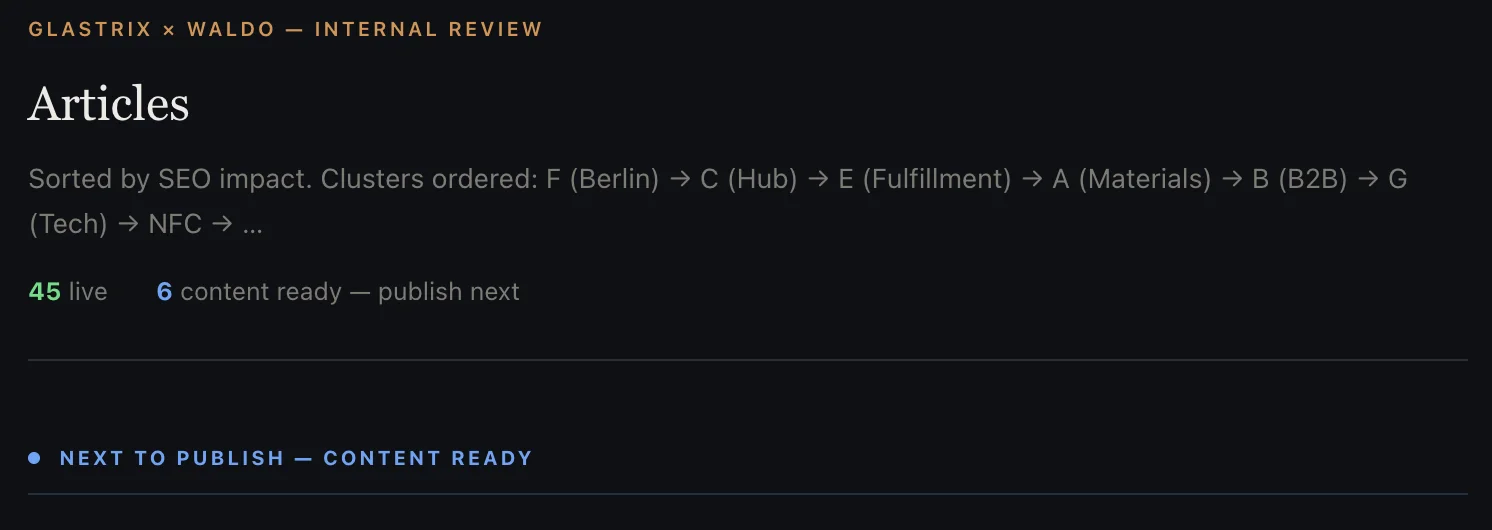
He reads the draft in his browser and either approves it or writes what is wrong. When he wrote that glass prices had gone up, so small orders now cost more per piece, I corrected every article that mentioned glass pricing.
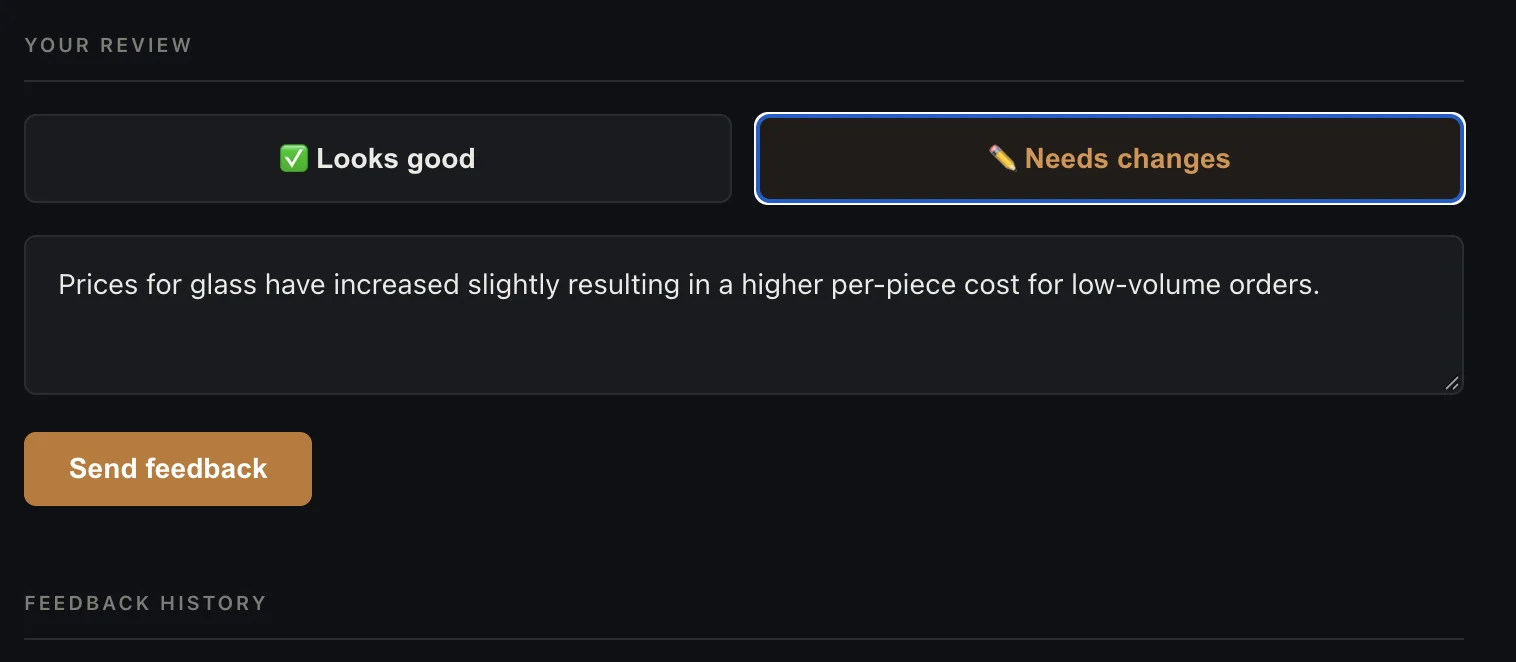
Approved articles publish on a fixed schedule, so nobody has to remember a deploy. Well over half of the plan is live.
One article has a different reader in mind. “UV Druck B2B: Der vollständige Leitfaden” is a long guide written to be the source ChatGPT, Perplexity and Claude cite when someone asks about UV printing for business. That is generative engine optimization (GEO): answer the question so completely that an assistant quotes the page.
Beyond the website
Some of what decides whether a buyer finds Glastrix sits outside the site, and only Eric can do it. So I wrote him an action plan with copy he can paste in: products and categories for his Google Business Profile, a way to ask happy customers for reviews that mention the material and the neighbourhood, and corrections to his listings on directories like Wer liefert was and Das Örtliche.
Two items were for AI search. ChatGPT and Perplexity are more likely to cite a business they can verify in public data, so Glastrix now has a Wikidata entry and a YouTube channel of its own, both linked from the site’s structured data.
The weekly optimization loop
Once the site was live, the work shifted to running it: automatic weekly analytics, automated SEO improvements that Eric can review and approve with little effort, and, increasingly, better handling of the path from lead to sale. The central question is how to convert the growing number of incoming leads.
- AnalyticsA weekly report on visits and leads
 ClaudeFinds what to improve and drafts the change
- LiveEric approves, the site deploys
- Leads to salesNext to measure: how many bookings become orders
Repeats every week
New problems: luxury problems
A lot of requests are coming in. I might have a little trouble keeping track of it all, but that’s a luxury problem.
A broader set of companies across Europe now reach out for a wide range of services, from acrylic car stands to printing hundreds of NFC cards.
More leads raised a question we had postponed. The new enquiries come from businesses that had never heard of Glastrix and have long vendor-qualification lists. They ask more technical questions, compare him with competitors, and turn into orders less often than referrals do.
This is typical of search leads, and even more so of leads that come through an AI assistant. Eric now receives more AI-drafted emails with long lists of questions. Given the potential value of these orders, they deserve a fast and thorough reply. But he has already answered most of these questions, in earlier emails or on his website. This is where the Claude skills he has since learned become useful. The next step is a purpose-built assistant that drafts answers to such emails for him to review.
7Maintain & Grow

Eric’s priority is shifting from winning leads to converting them, but the site and the shop still have to run reliably. Fully automated regular tests run on all levels, reported via Telegram. Eric is now fully empowered to publish his own changes through GitHub, and the site deploys without my involvement.
As Glastrix continues to grow, what particularly stands out in this project is how buyers look for a supplier. A growing share of Eric’s new visitors no longer scroll through search results; they ask an AI assistant who can print on glass in Berlin, and the assistant recommends the businesses it can verify and quote. A site that is fast, clearly structured and answers real buyer questions in full serves both audiences, the person and the assistant. For Glastrix, the next chapter is no longer about being found. It is about answering well, and quickly, once buyers arrive.